1977 “Lilly”
~Trigger Warning~ This is a story about a little girl born with congenital anomalies associated with a chromosomal disorder”
In 1977, ultrasound was not a routine part of prenatal care. We couldn’t see a baby’s face, count fingers and toes, or routinely identify congenital anomalies before birth. Sometimes we weren’t even certain of the due date. As labor and delivery nurses, we never really knew what surprises awaited us.
And one morning, a little girl named Lilly would leave an impression on me that lasted a lifetime.
Both delivery rooms were occupied when Naomi first felt the urge to push. We weren’t even certain she was full term. Our small maternity unit had two labor rooms and two delivery suites, and having three women ready to deliver simultaneously was almost unheard of!
Our obstetrician, Dr. M., was moving between the delivery rooms, still without his sterile gown. I checked Naomi. She wasn’t quite fully dilated, so we encouraged her to blow through her contractions and resist pushing. Her belly was unusually small.
I told Dr. M. she had only an anterior lip remaining. He picked up the wall phone and called his backup across the street.
Suddenly Betty, the nurse in Delivery Room 1, yelled for help. Her multiparous patient was crowning! I rushed in with Dr. M., who barely had time to catch the screaming baby boy, much less put on sterile gloves.
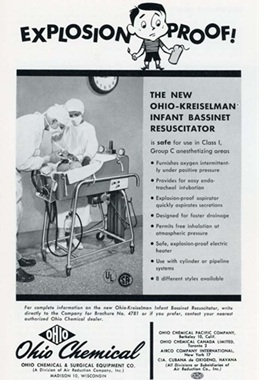
Meanwhile, nurses were switching rooms, those with more experience moving where needed most. A floor nurse came to help, and our manager was wheeling an older Kreiselman Infant warmer bed into Naomi’s labor room and gathered emergency supplies to set up a makeshift delivery area at her bedside. Within a few minutes, the call bell was yanked out of the wall, triggering the emergency alarm.
Everyone ran into Naomi’s room. She had just precipitously delivered a tiny baby girl in the bed.
The baby wasn’t breathing.
Betty was drying and stimulating her, desperately trying to get her to cry.
Silence.
Only Naomi’s frightened voice broke through.
“What’s wrong? Why isn’t she crying?”
Dr. M. clamped and cut the cord. I got her under the heater and grabbed the newborn Ambu bag from the dusty plastic bag hanging near the wall oxygen. The mask was too big for her tiny face!
“Somebody find the preemie mask!”
I struggled to maintain a seal until someone handed me a smaller mask. With positive-pressure ventilation, her color improved. After about a minute, she began moving and making weak little cries.
She was breathing on her own!
We reassured Naomi and brought her daughter close enough to touch while she stabilized. Dr. M. asked more questions about her pregnancy dates. Just the previous day, Naomi had been told she was eight and a half months along.
She named her daughter Lilly.
Lilly weighed just 4 pounds, 3 ounces.
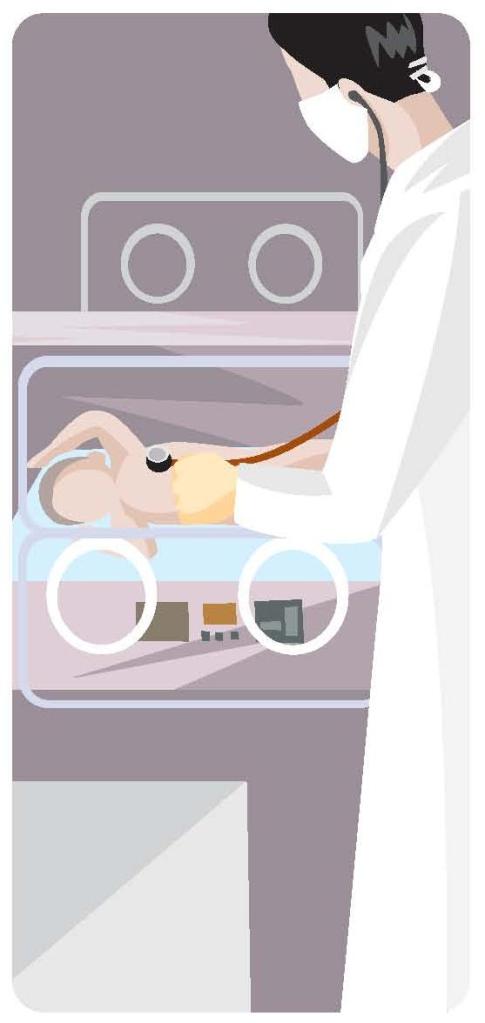
In our special care nursery, we had only one cardiac monitor but several isolettes, one of which was always kept warm. I placed Lilly in a warmed isolette, attached the monitor, and performed her routine newborn care: identification bands, footprints, silver nitrate eye drops, and a vitamin K injection. We kept her on extra oxygen, which we piped directly into the isolette, periodically checking the concentration with an oxygen analyzer. She remained pink with supplemental oxygen but had decreased muscle tone. Although small, she didn’t appear particularly premature.
During my assessment, I noticed several unusual findings.
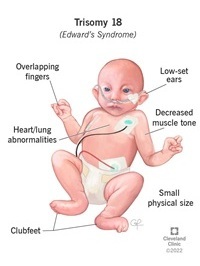
Her ears were low-set, her feet had the curved appearance described in textbooks as rocker-bottom feet, and her hands were clenched in an unusual position, with fingers overlapping. I could identify only two vessels in her umbilical cord rather than the usual three.
She had some characteristics of a full-term newborn, yet her muscle tone and extended extremities seemed more like those of a premature infant.
Something wasn’t right. None of us had ever cared for a baby quite like Lilly.
Naomi was desperate to see her baby.
In 1977, mothers rarely entered the nursery. Babies were generally cared for separately from their mothers, and even routine feeding followed the nursery’s schedule.
But our manager made an exception.
Naomi arrived in a wheelchair, frightened and anxious for news. I had her scrub her hands and put on a gown before bringing her alongside Lilly’s isolette.
I guided her hand through the small opening so she could touch her daughter’s leg.
“She is so little. Why is she so tiny?” she asked.
Then she noticed Lilly’s hands.
“She’s making a cute little fist.”
I reassured her that Lilly was stable for the moment and that the pediatrician would be arriving soon.
I couldn’t give her answers we didn’t yet have.
Searching for a Diagnosis
Our pediatrician, Dr. H., examined Lilly but wasn’t certain what was causing her unusual features.
When Naomi mentioned taking vitamin supplements during pregnancy, he asked to see them. After reviewing the labels and consulting a colleague at a larger medical center, he considered vitamin A toxicity as one possible explanation.
He also suspected a chromosomal disorder.
Lilly needed specialized evaluation, including chromosome studies, at a neonatal intensive care unit 75 miles away.
When Naomi returned to the nursery, she was crying.
She beside the isolette, gently holding Lilly’s tiny hand through the opening.
Then she began to sing.
Softly, she sang and talked to her daughter while I prepared the paperwork and supplies for transport.
Before the NICU team arrived, I wrapped Lilly in a blanket and placed her in Naomi’s arms, keeping oxygen nearby.
When the transport team arrived, they transferred Lilly to their monitoring equipment and established an umbilical arterial line. One team member carefully explained each procedure to Naomi and promised to call once Lilly was settled.
Finally, Naomi kissed her little girl goodbye.
And they were gone.
Just like a whirlwind.
Naomi was discharged the next day so she could be at her daughter’s side.
The Diagnosis
Several weeks later, we learned that chromosome studies had confirmed Trisomy 18, also known as Edwards syndrome. Lilly also had an associated congenital heart defect.
Edwards syndrome was first described in 1960. It is a rare condition caused by an extra copy of chromosome 18, affecting fetal growth and development.
, prenatal screening and diagnostic testing can often identify Trisomy 18 before birth. But in 1977, those capabilities were not routinely available to our patients.
According to the Cleveland Clinic, Trisomy 18 is a serious, life-limiting condition. Many affected pregnancies end in miscarriage or stillbirth. Babies born alive often have congenital heart defects, breathing difficulties, feeding problems, and other complications.
Survival varies, and although some children live considerably longer, the prognosis is often poor.
[Insert Cleveland Clinic diagram and source here.]
Looking Back
I have often thought about Lilly and her mother.
We didn’t have a prenatal ultrasound showing us what to expect. We had no advance warning, no team assembled for a known diagnosis, and no immediate answer for a mother asking why her baby wasn’t crying.
We had our training, our experience, the equipment available to us, and each other.
But what I remember most isn’t Lilly’s unusual physical features or even the frantic moments of resuscitation.
It’s Naomi sitting beside that isolette, holding her daughter’s tiny hand and singing to her.
In a time when mothers and newborns were routinely separated, that quiet moment of connection was something very special.
We didn’t yet know what Lilly’s future would hold. But Naomi knew she was her daughter. And she loved her.
Author’s Note: This story is drawn from my nursing experiences. Some patient details, conversations, and events have been combined or reconstructed to protect privacy. The medical practices, equipment, and nursing environment reflect the realities of the time. See my About page for more information.
Facing a Trisomy 18 diagnosis is scary and extremely overwhelming. Many Trisomy 18 pregnancies result in miscarriage or fetal death. There are resources available to help guide parents today. Following is a link to the Trisomy 18 Foundation. https://trisomy18.org/
Photo credit: Cleveland Clinic website accessed 10/16/2026
 Some of the stories I want to tell are about maternity life as an OB nurse in the 70 ‘s. This is what I remember and not any type of historical reference. Try to picture this as I attempt to set the stage for some of the other stories I wish to tell. There will be some birth stories, some breastfeeding stories and some ‘special baby’ stories. Congenital anomalies, syndromes and unusual situations which have beautiful love stories. I also need to mention that ads are random, and I am not recommending any item for which you may see an ad.

 Credit: NiDerLander